 AI Baby Look
November 11, 2026
Family Resemblance: Why Everyone Sees Someone Different
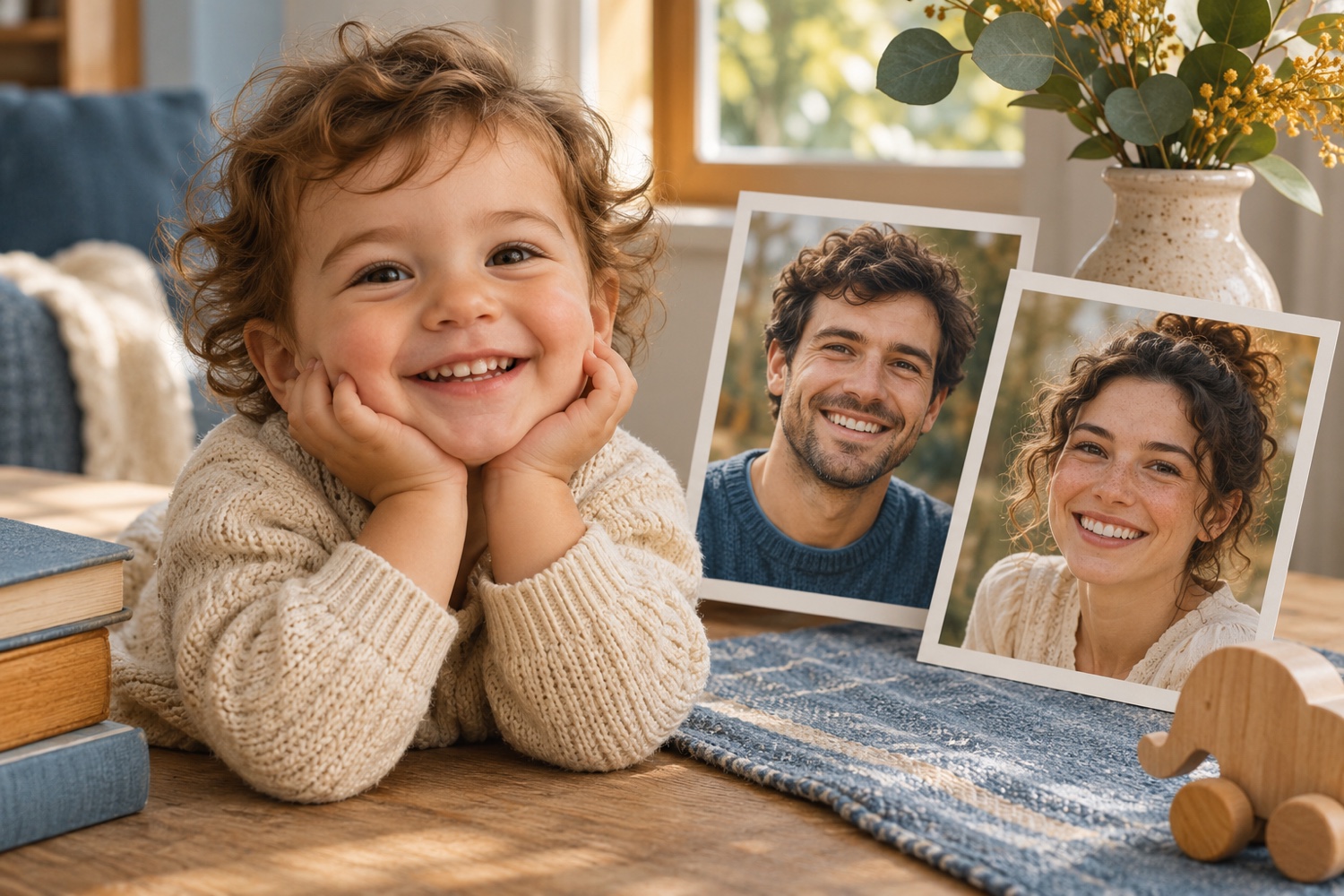
Show one baby photo to the family and you will hear three answers. Grandma sees her son. Your sister sees you. Your partner insists the baby looks like nobody but themselves. Everyone is looking at the same picture, so why does everyone see someone different?
Here is why one photo produces so many opinions, what each trait can and cannot tell you, what research says about babies looking like their fathers, and a simple family photo game that turns the debate into something fun to keep.
Why everyone sees a different resemblance
People look at different features
One person notices eye color first, another notices the hairline or hair color, and another notices the smile. A baby can have one parent’s eyes and the other parent’s mouth, so each person can be right about the feature they looked at. Several genes shape both eye color and hair color, which is why children so often mix traits from both sides. MedlinePlus Genetics, Eye Color
Expression and angle change the answer
A baby smiling straight at the camera and a baby looking away can seem to resemble different people. A smile can bring out one parent’s cheeks, while a serious face can show the other parent’s brow. That is why the same relative may change their mind after seeing the next photo.
Babies change quickly
A newborn’s face can be puffy after birth, and those details fade in the first weeks. A resemblance someone saw in the hospital may be gone by the second month, and a new one may appear. American Academy of Pediatrics, How Your Newborn Looks
Everyone compares the baby with a different face
Each relative compares the baby with the faces they know best. Grandma remembers her son at six months, and your sister remembers you at the same age. They are holding different pictures in their heads, so they reach different answers, and each can point to a real feature that matches.
What each trait can tell you
Some traits are better clues than others. Here is how the ones families argue about most are passed down.
| Trait | How it is inherited | Why it can surprise you |
|---|---|---|
| Eye color | Several genes; brown usually wins over blue | Two brown-eyed parents can have a blue-eyed baby. Try the eye color calculator |
| Hair color | Several genes; red needs a variant from both parents | Red hair can skip a generation. Try the hair color calculator |
| Height | Many genes plus nutrition and health | Children usually land near the parents’ average, not at either parent’s height. Try the height predictor |
| Skin tone | Many genes | Siblings with the same parents can differ noticeably |
| Face shape | Many genes, and it changes with growth | The parent a child resembles can switch between the baby and teen years |
Because so many genes are involved, a child is rarely a copy of one parent. Height is a good example: it is shaped by many genes plus nutrition and health, which is why it averages out instead of following one side. MedlinePlus Genetics, Height
Do babies really look more like their father?
You may have heard that newborns look like their dads so the father will recognise the baby as his own. The idea comes from a small 1995 study in Nature, in which strangers matched photos of 1-year-olds with their fathers more often than with their mothers. Later studies did not find the same result, and some found the opposite or no difference. What does seem common is that relatives, especially on the mother’s side, are quick to say the baby looks like Dad. So if the whole family insists your baby is a copy of your partner, that says as much about the family as about the baby.
A family photo game for the next gathering
Round 1: write down the first detail
Put three unlabeled childhood photos on the table, for example the baby and both parents at a similar age. Ask everyone to write down the first detail they notice before guessing who is who: “the smile goes up on the left,” “those eyebrows,” “the chin.”
Round 2: swap the photos
Play again with a different photo of each person, with a different expression or angle. See which observations survive. A feature that people spot in both rounds is a better clue than one that appears only in a single picture.
Round 3: add a portrait from both parents
For a third round, make a portrait with the AI baby generator for couples from one photo of each parent, and ask everyone which features came from which side. It works well for couples who are expecting, because there is no baby photo to argue about yet. Here is an example to practise on: which features does the son take from each parent?
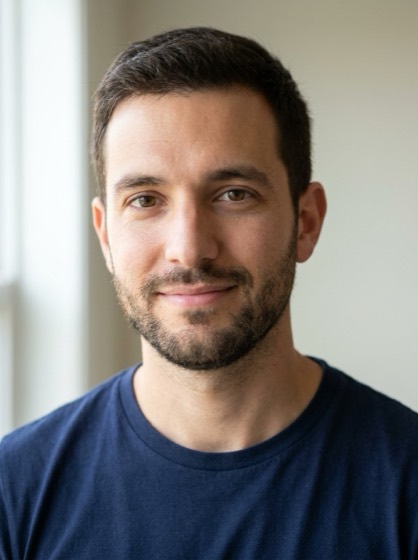
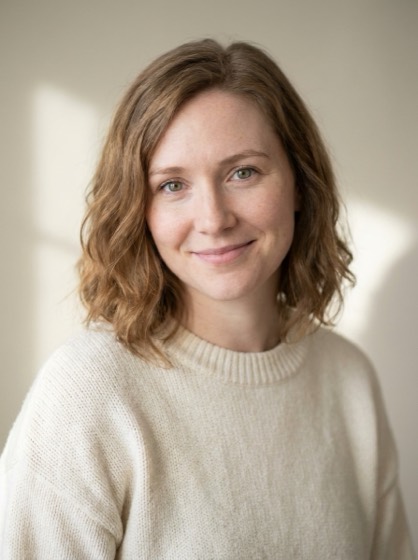
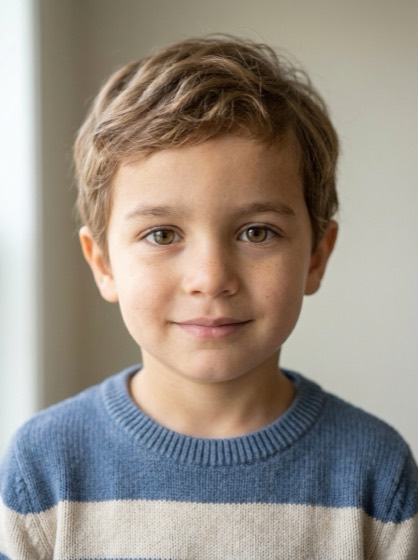
Every face here, parents included, is an AI-generated example made with AI Baby Look, not a real family.
Like mom or like dad?
The most common family argument is which parent the baby takes after. The honest answer is usually both. Many families see a daughter who looks like one parent as a baby and like the other as a teenager. You can try this with the generator: see what your daughter could look like at age 1 and again at 15, and lean the result toward each parent.
The debate often extends to names. Some families pick a first name that honors one side and a middle name that honors the other, which keeps everyone happy.
A fair resemblance checklist
- Compare photos taken at roughly the same age. A parent’s adult photo is a poor match for a baby’s face.
- Use front-facing photos in similar light. Shadows can invent a resemblance or hide one.
- Look at one feature at a time: eyes, nose, mouth, ears, hairline.
- Check both sides of the family, grandparents included. A trait that skipped a parent can come back in a grandchild.
- Try again in a few months. The answer will probably change.
Keep the answers for the album
Write the most specific observation under each photo, with who said it. “Grandma spotted the half-smile in both pictures” gives the next reader something to look for. There is no need to decide which side of the family won.
FAQ
Who does the baby look like, mom or dad?
Usually both. A baby can have one parent’s eyes and the other’s mouth, and the resemblance often shifts as the face grows. Compare photos of the baby and each parent at a similar age for the fairest answer.
Do babies look more like dad at birth?
Not reliably. A small 1995 study suggested 1-year-olds resemble their fathers more, but later studies did not find the same result. Relatives, especially on the mother’s side, are simply more likely to say so.
Why does my baby look different in every photo?
Expression, angle, light and the camera all change how a face reads, and babies’ faces change quickly in the first year. Compare photos taken in similar light and from the front for a clearer view.
Why does my baby look like my partner and nothing like me?
Your traits may be there but hidden. Some, like blue eyes or red hair, only show when both parents pass them on, and others appear later as the face grows. Many children look more like the other parent in a few years.
Can a baby look more like a grandparent than a parent?
Yes. Children inherit genes from all four grandparents through their parents, so a feature that skipped a parent, such as blue eyes or red hair, can show up again in a grandchild.